Honestly - are we in an AI bubble?

Are We in an AI Bubble?
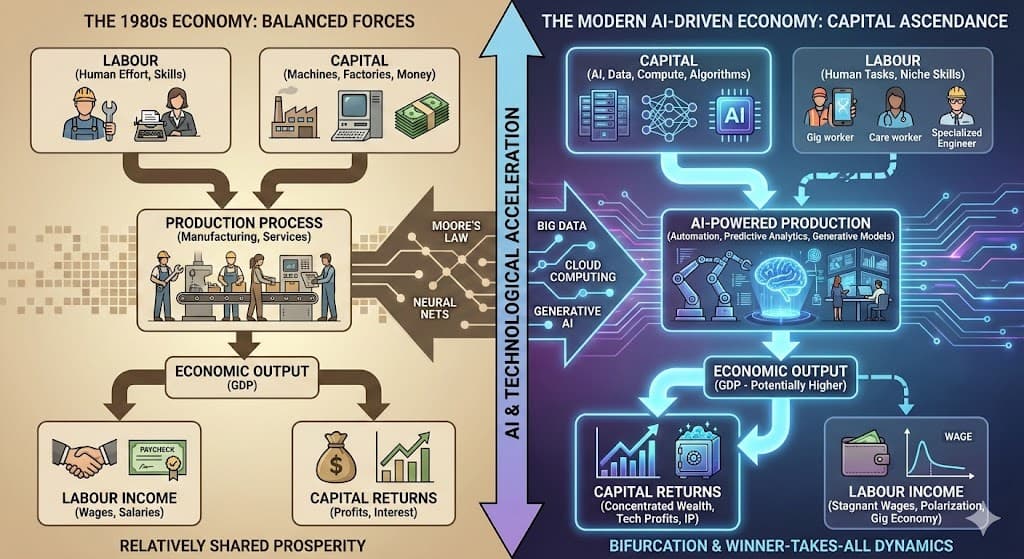
Lots of capital are pouring into AI right now, from massive data center investments and cutting-edge semiconductor fabrication to a gold rush at the app layer. As one sector heats up, capital flows quickly to the next perceived opportunity, defining the relentless pace of innovation and speculation in artificial intelligence. But with so much money flooding the space, it’s natural to wonder: are we in an AI bubble? And — if so — how do we spot when the music stops?
The term “bubble” describes a market cycle characterized by surging asset prices driven more by exuberant speculation than underlying fundamentals. We saw this during the dot-com boom of the late 1990s and the housing bubble of the 2000s. In both cases, abundant capital chased rapidly growing markets, inflating valuations far beyond sustainable levels. Today, AI has become a gravitational force, pulling in record-breaking investments from tech giants, venture capitalists, and governments worldwide.
Much of this capital has targeted AI infrastructure. Hyperscale data centers, networks of powerful GPUs, and cutting-edge chips produced by companies like Nvidia and AMD serve as the backbone of machine learning applications. Atop this digital backbone, startups and established companies alike are racing to build foundational models, digital assistants, and AI-driven enterprise solutions. The excitement is reflected in surging valuations, intense hiring, and dizzying expectations for AI’s transformative potential. The economic impact is real: productivity gains, new business models, and rising GDP growth can be partly attributed to rapid AI adoption.
Yet, history suggests that unchecked enthusiasm can lead to over-investment and misallocated capital. So, what signals might indicate an AI bubble — and how might we know when it ends?
One crucial macro indicator is the relationship between investment and realized value. Is AI adoption driving sustained productivity improvements across industries, or are we seeing a glut of applications with marginal utility? If significant portions of AI investment flow into projects that fail to find a market or deliver promised efficiencies, this could foreshadow trouble—similar to the glut of “eyeball” business models during the dot-com era.
Another macro factor is the cost of capital. In an environment of low interest rates, speculative investing flourishes; many risky bets seem justified when borrowing is cheap. If central banks raise rates to fight inflation, capital could become scarcer and more expensive, causing investors to pull back and scrutinize AI investments more critically.
Furthermore, technological bottlenecks may slow momentum. The growth of AI depends on ongoing breakthroughs in hardware, algorithms, data quality, and energy efficiency. If technological progress stalls or supply chain issues become intractable, capital inflows may taper off.
Finally, regulatory changes could shift the landscape quickly. Stricter rules around data privacy, competition, or model safety might limit the growth of some AI-driven business models and dampen investor enthusiasm.
In summary, while capital flooding into AI is currently boosting growth and optimism, bubble risks are ever-present when speculation outpaces fundamentals. Smart investors and policymakers will keep an eye on productivity metrics, interest rates, technological advances, and regulation — the macro factors most likely to determine whether the AI boom is sustainable, or simply another speculative cycle destined to end with a pop.
--Johnny